Don't just screen. Build what comes after.
Identification is the cheap part. A result handed to a family with nowhere to take it is not progress — it is a new source of worry.
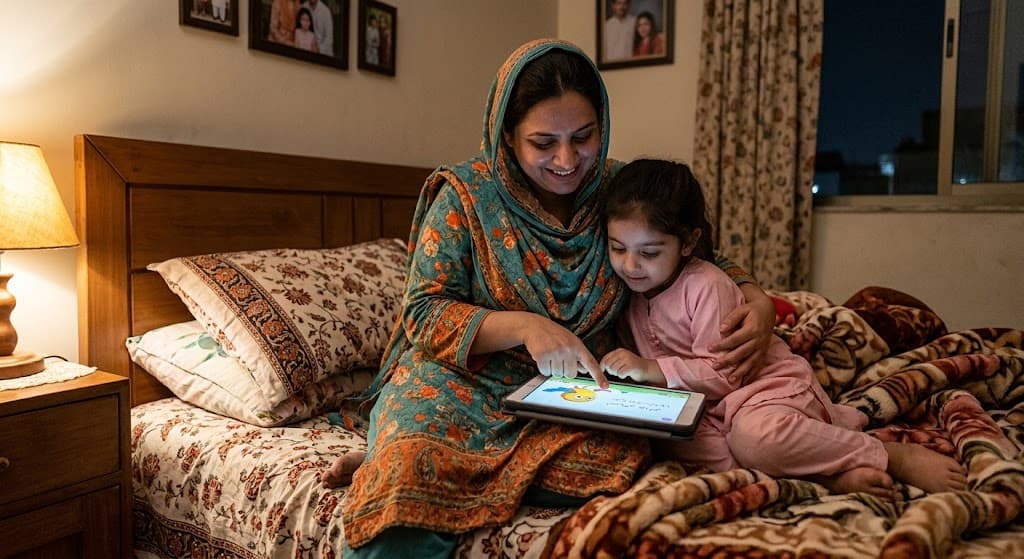
We spend a lot of our time arguing for early screening, so it is worth saying the uncomfortable part out loud. Screening on its own can make things worse. A parent who learns on a Tuesday afternoon that their four-year-old shows markers of autism, and who then finds the nearest assessment is four hours away and six months out, has been handed a burden rather than a service.
This is the pattern we kept meeting in fieldwork. Identification is the cheap part — a tablet, a trained teacher, an afternoon. Everything that has to follow is expensive, slow and largely unbuilt. So families carry their own folder of reports from professional to professional, repeating the same story, assembling a care plan out of fragments nobody designed to fit together.
Three things a result needs behind it
Someone to interpret it. A screening flag is a probability, not a verdict, and a family should never be left to translate one on their own. That means a named person to call, not a leaflet.
A plan the teacher can actually run. Most support happens in a classroom of forty children, delivered by someone with no specialist training and no free period. A plan that assumes otherwise will be ignored, correctly.
A record that travels. When a child moves from screening to therapy to a new school, the history should move too. At present it moves only if a parent physically carries it.
Inclusion rarely fails at any single stage. It fails in the handovers between them.
What we did about it
This is why our work did not stop at screening tools. Rawaan and SparkEd exist because a flagged child needs something to do next. The Practice Management System exists because practitioners were losing hours to scheduling and paper records that should have gone to sessions. NEST Institute, our sister centre, exists because some of this cannot be solved with software at all — it needs a room, a clinician and time.
So: keep screening. Screen earlier and more widely than feels comfortable. But if you are a school or a clinic planning to start, plan the next six months at the same time. Decide who interprets the result, what the teacher will do differently on Monday, and where the record will live. That planning costs very little and it is the difference between finding children and helping them.
If you are planning a screening programme, we can help you design the pathway behind it — systems, inclusion planning and evaluation.
Our consultancy