An icon for the word
A clear picture carries the meaning before any reading is required, which is often where a struggling reader gets stuck.
Urdu vocabulary built from the words a child already lives with.
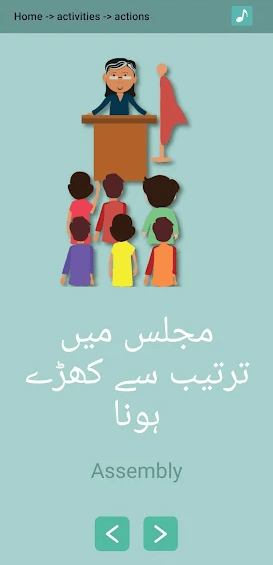
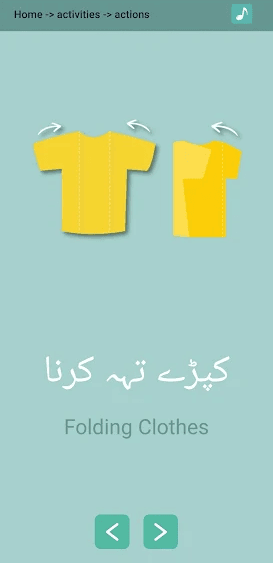
Everyday words are grouped into collections, and each one carries an icon plus English and Urdu voice and text. Three ways into the same word, so a child can find the one that works and build recall on their own.
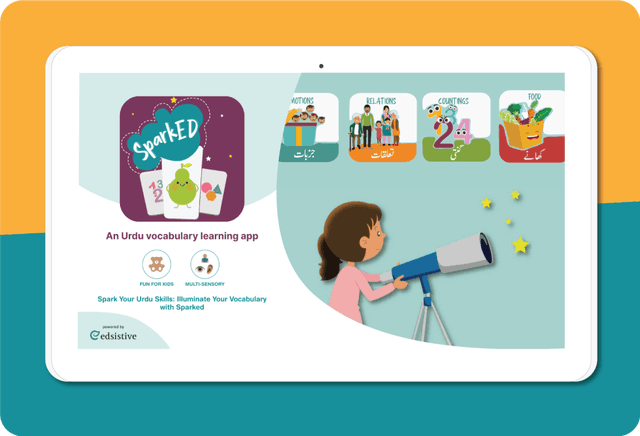
SparkEd teaches Urdu vocabulary through collections of everyday words. Each word appears as an icon, as written text in English and Urdu, and as spoken audio in both — so a child who cannot yet decode the script still has a route in through the picture and the sound.
That matters for children with learning difficulties, for children learning Urdu as a second language, and for any child building early vocabulary. The app is designed to be used alone, at whatever pace the child sets.
SparkEd builds vocabulary. It is not a screening or diagnostic tool — for that, see EAST and our dyslexia research.
Picture, text and sound arrive together on the same card. A child leans on whichever one they can read today, and the other two follow.
A clear picture carries the meaning before any reading is required, which is often where a struggling reader gets stuck.
English and Urdu text sit together on the card, so a child links what they already know to what they are learning.
Voice in English and Urdu gives pronunciation and a second route to recall for children who learn by ear.
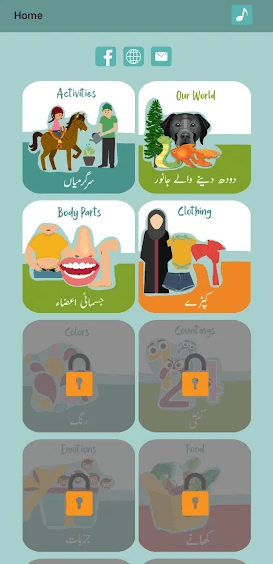
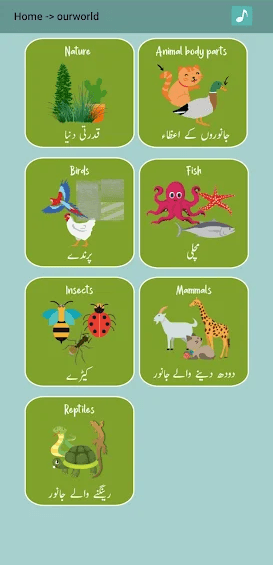
Vocabulary is organised into collections of everyday words rather than alphabetical lists, so a child learns a set that belongs together — the things in a kitchen, the animals in a story, the words used getting ready for school.
Working through a collection gives a finishing point, which is what makes a child come back for the next one.
Choose a collection, work through the cards, practise what was learned, and finish the set.
SparkEd was built for children who find written Urdu hard to hold on to. That turns out to be a wider group than it first appears.